
The Jobs Report Was Good. Your Credit Card Rate Isn't Coming Down

Before we get into today's numbers — if you're carrying credit card debt, this is worth 30 seconds of your time:
Put Interest On Ice Until Nearly 2027
If you have outstanding credit card debt, getting a new 0% intro APR credit card could help ease the pressure while you pay down your balances.
Our credit card experts identified top credit cards for balance transfers that are perfect for anyone looking to pay down debt and not add to it!
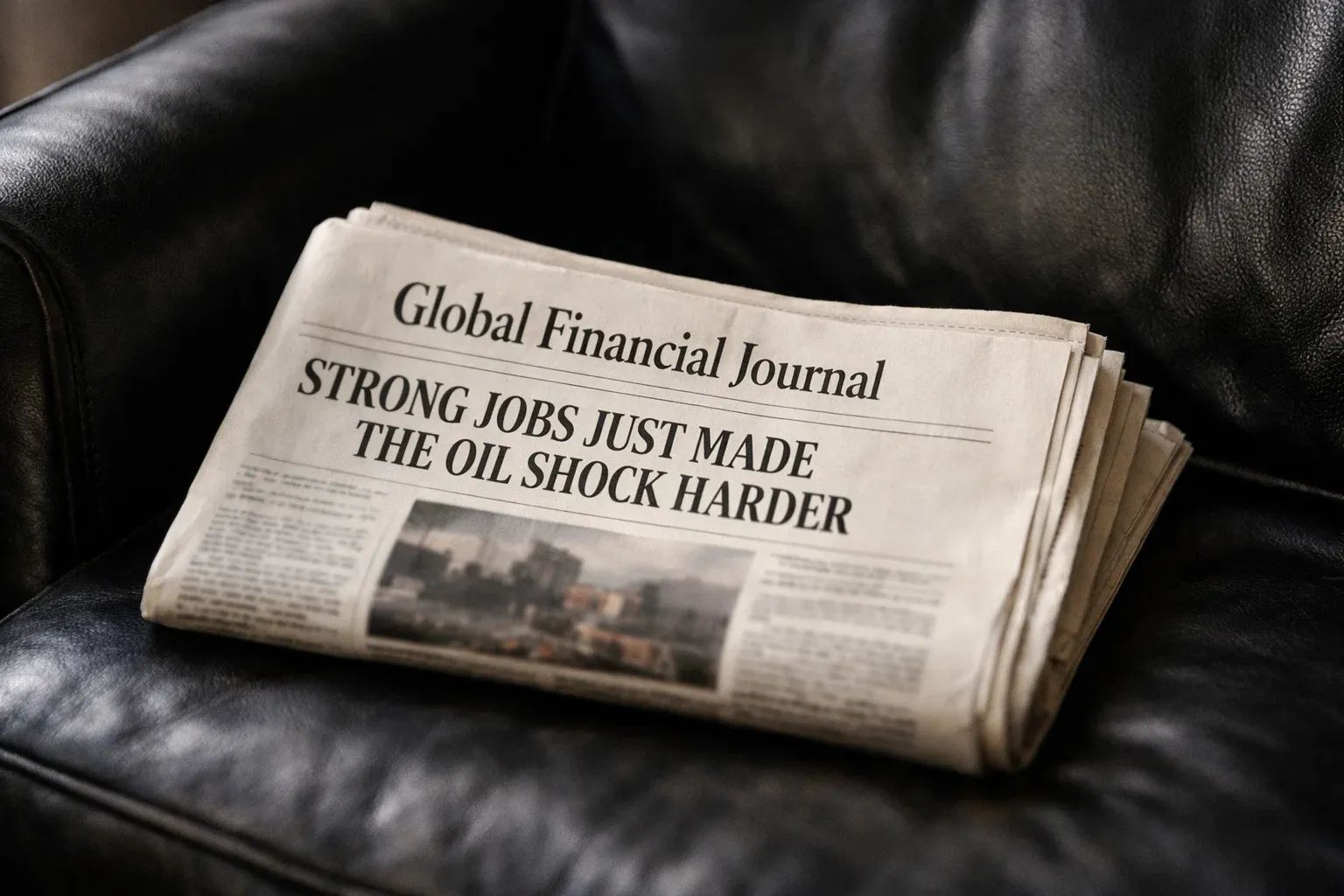
This morning the Bureau of Labor Statistics reported that the U.S. economy added 178,000 jobs in March. Wall Street had expected around 60,000. The unemployment rate edged down to 4.3%.
On its face, that's a solid number. Three months ago it would have been unambiguously welcome news. Today, for anyone hoping for lower interest rates before year-end, it makes the math harder.
Here's why.
A strong jobs report in the wrong environment
The Federal Reserve has kept its benchmark rate at 3.5% to 3.75% since December. It has held steady through two consecutive meetings, watching oil prices climb, watching inflation expectations creep higher, and waiting to see whether the economy gives it room to cut.
March's jobs number gives it less room, not more.
Futures markets now point to virtually no probability of a rate move at the April 28-29 Fed meeting, and a 77.5% probability the Fed stays on hold through the end of the year. That's a dramatic shift from January, when markets had priced in two cuts for 2026.
The underlying picture is more complicated than the headline suggests. Even with today's positive report, net job creation has been minimal for more than a year, with monthly gains and losses adding up to little net growth overall. Healthcare again did most of the heavy lifting, adding 76,000 positions. Long-term unemployment, meaning workers out of a job for 27 weeks or more, has risen by 322,000 over the past year. The labor force participation rate stayed flat at 61.9%.
So the headline is better than feared. The underlying trends are still uneven. And the Fed now has to weigh both.
Oil is the variable that changes everything
The jobs report lands in an economy already dealing with an energy shock that has no obvious near-term resolution.
Brent crude is trading above $110 a barrel. Unleaded gasoline prices jumped over 75 cents per gallon since the Iran conflict began, while diesel topped $5 per gallon for the first time since 2022. Those are costs that hit households directly, before any secondary effects work through the supply chain.
Morningstar's senior economist forecasts that overall PCE inflation will accelerate to 3.5% year-over-year by April, up from 2.8% in January, which would mark the highest reading since May 2023. That's the inflation measure the Fed watches most closely. If it prints at 3.5% in April, the conversation shifts from "when does the Fed cut" to "does the Fed cut at all this year."
Back in January, the market had priced in two rate cuts for 2026. As of last week, that was down to one, edging close to zero. Morgan Stanley has already pushed its expected cuts from June and September to September and December. Bank of America has gone further, suggesting hikes are more plausible than cuts if oil stays elevated.
Powell himself has been careful not to rule anything out. "The rate forecast is conditional on the performance of the economy," he said after the March meeting. "If we don't see that progress, then you won't see the rate cut."
What this means if you're living on savings or fixed income
For retirees and near-retirees, this situation cuts in two directions.
The frustrating part: rate relief is getting pushed further out. Anyone who was waiting for CD rates or savings account yields to reflect lower Fed policy is going to wait longer. The gap between online high-yield savings accounts, still paying around 4% to 4.5% at competitive institutions, and traditional bank accounts, still stuck near 0.4%, remains wide. If you haven't moved idle cash to a higher-yield account, the cost of waiting is now measured in months, not just weeks.
The less obvious part: a Fed that stays on hold is, at least in the near term, a friend to savers. The window to lock in a 3-year or 5-year CD at current rates is still open. If cuts do come in late 2026 or slip into 2027, locking in now looks better in hindsight than waiting.
On the credit side, today's news is more straightforwardly painful. Credit card rates are not coming down anytime soon. The Navy Federal chief economist summed it up simply after the jobs report: "The March data will keep the Federal Reserve on hold, but no one is declaring victory yet." For anyone carrying a balance at current APRs, the case for a 0% balance transfer has only gotten stronger. There's no rate cavalry coming to ease the burden.
The bigger picture
What today's report confirms is that the Fed is now stuck between two problems at once. A strong labor market argues against cuts. An oil-driven inflation shock argues against cuts. A slowing global economy and falling consumer confidence argue for cuts. Powell doesn't get to pick which signals to weigh. He has to weigh all of them.
Morgan Stanley's view is that the Iran situation "delays, not denies" rate cuts, and that the Treasury market is likely to perform reasonably well if the economy avoids a deep slowdown. That's the more optimistic read. The pessimistic read is that cuts keep getting pushed into the future until the energy situation resolves, and nobody knows when that is.
What doesn't change in either scenario: the basic mechanics of managing money in a higher-for-longer environment. Keep short-duration assets, lock in yields where you can, reduce high-rate debt while transfers are available, and don't let a rate forecast drive decisions that should be driven by your own income and spending reality.
The jobs number was good. The situation it landed in is complicated. Those two things can both be true at the same time.
The Secret To Paying Off Debt Faster (It All Starts With The Right Credit Card) Ad by FinanceBuzz
Written by Deniss Slinkins
Global Financial Journal