
The Reassurance That Contradicted the Data

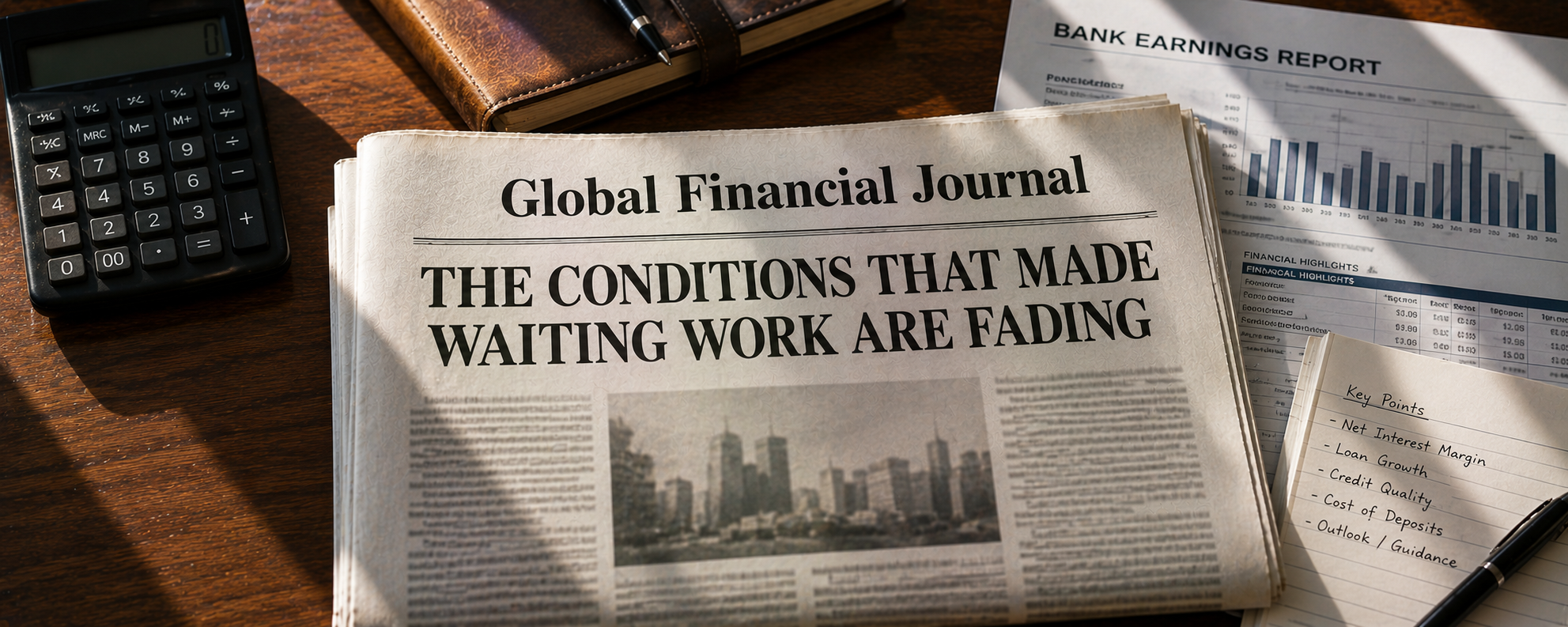
Patience has been a reliable strategy in American finance for most of the past forty years. Inflation eventually cools. Rates eventually fall. Markets eventually recover. The household that did nothing usually came out fine, sometimes better than the household that acted.
That logic has been fraying for three years. This week, three separate events made the fraying harder to ignore. None of them was front-page news. All of them said something about the cost of waiting that is worth taking seriously.
Tackle your credit card debt with 0% interest
Did you know some credit cards could actually help you get out of debt faster? Yes, it sounds crazy. But it’s true.
The secret: Find a card with a “0% intro APR" period for balance transfers.
Then, transfer your debt balance and pay it down as much as possible during the intro period. No interest means you could pay off the debt faster.
Wells Fargo Quietly Removed Its 2026 Cut Forecast
Through January and February, the consensus was three Federal Reserve rate cuts in 2026. By March, it had narrowed to one or two. By the end of last week, the CME FedWatch tool showed a 5.1% probability of any cut at the June meeting. Five percent.
Wells Fargo Investment Institute, one of the more dovish forecasting shops on Wall Street, removed its projection of any 2026 rate cut entirely. Not delayed. Removed. Goldman, JPMorgan, and Bank of America have all walked back their forecasts in the same direction over the past sixty days. The repricing has been so steady and so quiet that most retail investors have not registered it.
What this means in practical terms is straightforward. Anything with a variable rate, anything dependent on refinancing, anything carrying a balance at 23.75% APR, is no longer a position that benefits from waiting. The relief that has historically arrived has been priced out of the calendar. The cost of waiting another six months is now a real number rather than a temporary inconvenience.
The Pause That Expires in July
In January, the Department of Education began sending wage garnishment notices to defaulted student loan borrowers. The notices stopped on January 16. The administration paused involuntary collections, citing reforms under the Working Families Tax Cuts Act.
The pause expires around July.
When it does, the Treasury Offset Program resumes automatic seizure of tax refunds. Administrative Wage Garnishment resumes at up to 15% of disposable income. Social Security benefits become eligible for offset. The infrastructure has been sitting idle for four months. It does not need to be rebuilt to restart.
This affects more people than the borrowers themselves. As of October, 5.5 million people were already in default on $140 billion in federal student loans. Another 3.68 million were past 270 days delinquent, the threshold for default classification. The aggregate financial pressure that hits in July does not stay confined to the borrower. It compresses the household around them. It often becomes the parents' problem before it becomes anyone's plan to solve.
The Bank Earnings Comments Most People Missed
JPMorgan's Q1 earnings call on April 11 contained a line worth reading twice. Jamie Dimon told analysts there might be "some pain, but nothing particularly worrying" in consumer credit. The phrasing was carefully chosen. It also contradicted the data the bank itself had just reported, which showed credit card net charge-offs rising to 3.39%, the highest in over a decade.
Bank of America said something similar on the same day. Brian Moynihan acknowledged "areas of stress" in lower-credit-quality consumers without elaborating. Citi flagged "elevated charge-off rates" in its consumer business. The pattern across all three calls was the same: acknowledgment of stress paired with reassurance that it was contained.
What the banks were really signaling was different. The aggregate credit data they have access to, ninety days ahead of the public, was deteriorating. They were telling the market not to worry while quietly tightening underwriting standards in real time. The consumer who walks into a branch in May to apply for a balance transfer card faces a different approval landscape than the consumer who applied in February. That tightening continues regardless of whether the broader headlines focus on it.
What All Three Add Up To
The three events have nothing visibly in common. A forecaster removing a projection. A federal collections pause. A handful of bank earnings calls.
What links them is the same underlying signal. The conditions that made waiting profitable are no longer present. Rates are not coming down on the timeline anyone expected. Federal collections are about to add pressure to millions of strained balance sheets simultaneously. And the institutions with the best read on consumer credit are quietly tightening even as they tell the public there is nothing to see.
For the person carrying a card balance at 23.75%, watching property taxes climb, or supporting an adult child who has been quietly slipping toward default, the practical implication is simple. The window for moves that depend on access to credit, like consolidating a balance onto a 0% promotional rate, is currently open. Reports like the ones landing this month tend to be what closes it.
The cost of waiting has been quietly repricing for months. This week it became visible.
Written by Deniss Slinkins
Global Financial Journal