
The Fed Won’t Cut Your Card Rate

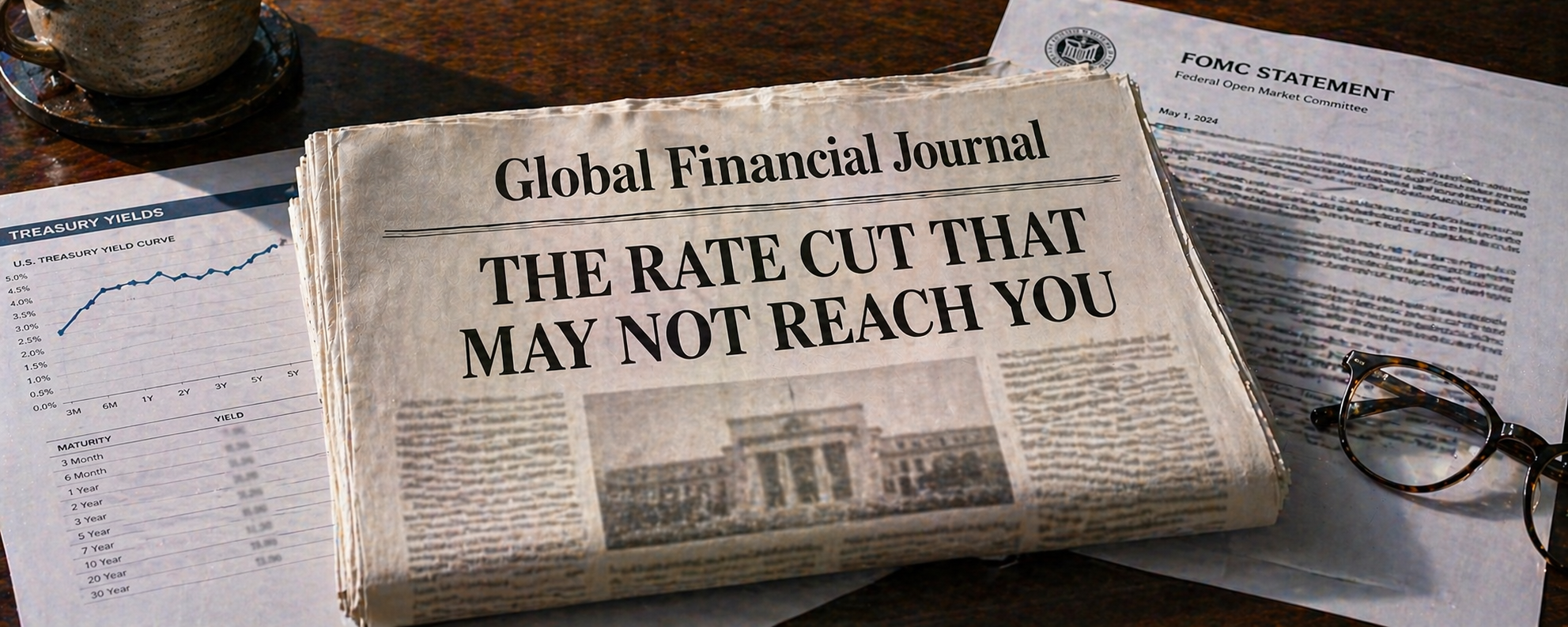
Today is the kind of day financial historians will mark in retrospect. Jerome Powell delivers his final press conference as Federal Reserve Chair. Kevin Warsh faces a confirmation vote in the Senate Banking Committee that will shape monetary policy for the next four years. The FOMC announces another rate hold at 3.50% to 3.75%.
Put Interest On Ice With These Top Credit Cards
Did you know some credit cards could actually help you get out of debt faster? Yes, it sounds crazy. But it’s true.
The secret: Find a card with a “0% intro APR" period for balance transfers.
Then, transfer your debt balance and pay it down as much as possible during the intro period. No interest means you could pay off the debt faster.
The Transmission Problem Nobody Wants to Discuss
The mechanism people assume is simple: the Fed cuts rates, banks cut their rates, credit card APRs follow. That mechanism stopped functioning years ago.
During the last cycle of cuts in 2024 and 2025, the federal funds rate dropped from 5.50% down to 3.75%. The average APR on existing credit card balances fell from 22.84% to 21.91%. That is a movement of less than one percentage point on consumer rates against a Fed move of 175 basis points. The transmission ratio was roughly 0.05. For every dollar of cuts the Fed delivered, household borrowing costs fell by a nickel.
The reason is structural. Credit card pricing has decoupled from policy rates. Banks now price card APRs against borrower risk, regulatory capital requirements, and the cost of insuring against default. Federal funds movements affect the marginal cost of bank funding, but card pricing has many other inputs that have all been moving in the wrong direction. Default rates are rising. Subprime auto delinquencies just hit a 32-year record. Commercial real estate is heading into a refinancing wall in 2026. Banks have been raising risk premiums on consumer credit, not lowering them.
The new Fed Chair, whoever it ends up being, inherits this transmission problem. Warsh is widely viewed as more hawkish than Powell, which means rate cuts may come slower and shallower under his leadership than market consensus has been assuming. But even if cuts come faster than expected, the historical record suggests credit card APRs will barely notice.
Why Today Is Actually a Big Deal for Markets
The Powell to Warsh transition will reprice expectations across asset classes, even if it does not directly affect what households pay on revolving balances.
Treasury yields will move on Warsh's first signals. Gold has already been pricing in elevated geopolitical risk and inflation persistence at $4,617 per ounce. The dollar index will respond to perceived hawkishness or dovishness in the early statements from the new chair. These are the markets where institutional capital expresses its views on Fed leadership, and they will be active for weeks.
The Mag-7 earnings reports tonight add another layer. Alphabet, Amazon, Meta, and Microsoft together represent 44% of S&P 500 market capitalization. Their AI capital expenditure guidance will determine whether the technology rally that has carried the indices higher continues or stalls. OpenAI just missed its own revenue targets and flagged compute funding concerns. The disconnect between AI capex and AI monetization is the single largest concentration risk in the market right now.
Powell's farewell language will shape the narrative through May. If he speaks plainly about the Iran war's impact on inflation persistence, or about credit stress building in subprime sectors, that framing will carry weight precisely because he no longer has to manage market expectations. Outgoing Fed Chairs sometimes speak more directly than sitting ones. That candor, if it comes today, will move positioning.
The Personal Finance Math the Transition Does Not Touch
Here is what the headlines about Powell, Warsh, and the FOMC will not address: the math on revolving credit.
The average credit card APR on new offers is 23.75%. The average household carrying revolving debt holds a balance of $11,149. That balance generates approximately $221 per month in interest at the prevailing rate. Annualized, the household pays roughly $2,650 in interest charges before any new spending is added.
Whether Powell or Warsh sits at the top of the Federal Reserve, this math does not change. The transmission from policy rate to consumer credit is broken at exactly the level where it would matter most for households. The waiting strategy that many people have been using, which is to assume rates will eventually fall and revolving debt will become cheaper to service on its own, has been a losing strategy for the last 18 months and is likely to remain a losing strategy regardless of who chairs the Federal Reserve through 2027.
There are exactly three things any individual household can control about its own cost of capital in this environment. The interest rate it pays. The pace at which it reduces principal. And the structure of the credit it uses. The Fed transition affects none of those variables. A balance transfer to a card with a 0% promotional APR for 18 to 21 months affects all three of them, mechanically, the moment the transfer clears.
What to Pay Attention to After the Press Conference
The transition is genuinely historic. The market response to it will be worth watching. But the practical implications for personal balance sheets are smaller than the coverage will suggest.
Pay attention to whether Warsh, if confirmed, signals an intention to address the consumer credit transmission problem at all. Most Fed chairs treat household borrowing costs as a downstream consequence of their policy decisions rather than a direct target. That has been increasingly inadequate as the gap between policy rates and consumer credit pricing has widened. If a new Chair acknowledges this gap as a structural problem worth addressing, that would be genuinely consequential. Most likely he will not.
Pay attention to inflation expectations more than to rate cut timing. CPI just jumped from 2.4% to 3.3% in a single month, driven by energy costs from the ongoing Hormuz situation. If energy stress persists into the third quarter, the inflation measurement window that determines next year's cost-of-living adjustments will produce numbers that further widen the gap between official metrics and household reality.
And pay attention to the difference between what is genuinely changing today and what is staying the same. The Fed leadership is changing. The American household balance sheet is not. The mechanisms that compound interest on revolving debt continue to work the same way regardless of who reads the policy statement.
For the household making decisions in late April 2026, the most useful thing to do today is to ignore most of the coverage and focus on the variables that are actually within reach.
Written by Deniss Slinkins
Global Financial Journal