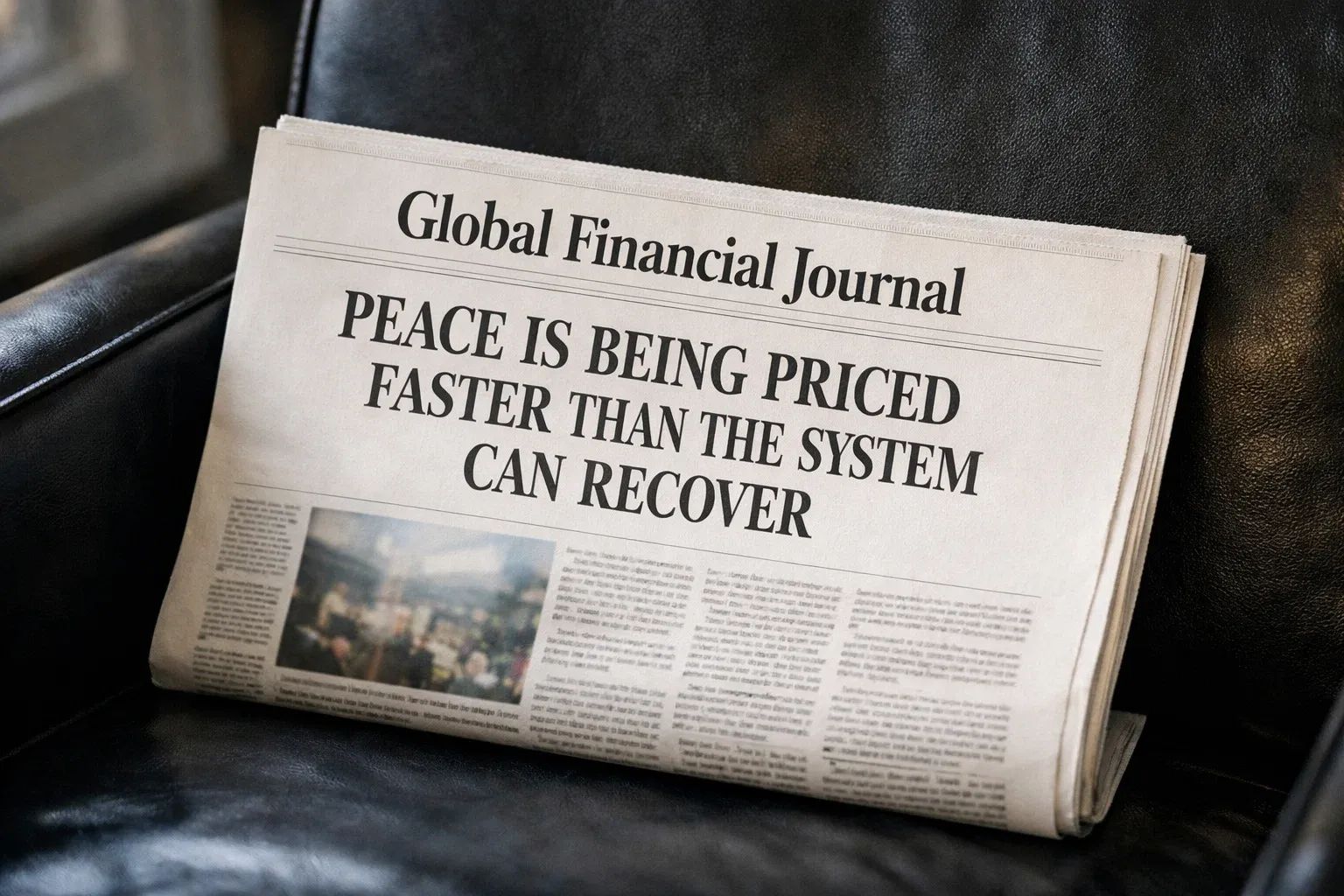
Peace Is Being Priced Faster Than the System Can Recover

Pay No Interest Until Nearly 2027
Did you know some credit cards could actually help you get out of debt faster?
Yes, it sounds crazy. But it’s true.
The secret: Find a card with a “0% intro APR" period for balance transfers.
Then, transfer your debt balance and pay it down as much as possible during the intro period.
No interest means you could pay off the debt faster.
The market found exactly what it wanted this week: a reason to believe the worst may already be behind it.
Iran said the Strait of Hormuz is open again for commercial shipping during the ceasefire. Oil fell hard. Stocks pushed to fresh highs. Brent dropped to about $88.80 and WTI to about $83.89, both the lowest since March 11. Investors moved quickly back into risk.
That move makes sense. But it also deserves a harder look.
Because the market is not really pricing a fully restored system. It is pricing a path back toward one.
Open Strait, Active Blockade
The U.S. blockade of Iranian ports remains in force even while commercial traffic through Hormuz has resumed. Trump said the blockade would stay in full force until a complete deal is reached. That means the biggest shipping chokepoint in the oil market is open again, but the broader conflict architecture has not been cleanly resolved.
Oil can fall faster than energy risk disappears.
Even after the sharp drop in crude, analysts say the European market will likely remain tight because supply chains, shipping routes, and replacement flows do not normalize overnight. A reopened strait is a meaningful step. It is not the same thing as a fully restored energy system.
And yet the market is moving as though a cleaner outcome is already in sight.
Wall Street rallied again on April 17, with the S&P 500 and Nasdaq extending their gains as investors embraced peace hopes, falling oil, and strong earnings. Travel and consumer-linked shares jumped. The VIX fell to a two-month low. This is a market that is no longer paying primarily for safety. It is paying for relief, for reopening, and for upside.
The Fed Is Back in the Picture
For weeks, the working assumption was that the Iran war had made rate cuts less likely because higher oil would keep inflation sticky. The drop in oil and the reopening of Hormuz may now be recasting the Fed's options.
Traders who had been leaning toward no cuts until 2027 are again starting to price the possibility of Fed easing by the end of 2026 if tensions continue to fade and energy prices stay lower. That is a meaningful change in the market's internal logic.
A week ago, investors were trying to figure out how much damage the oil shock would do to inflation and growth. Today, they are starting to imagine the opposite: a world where the war scare fades, oil falls back, and the Fed eventually regains room to cut.
That may prove too optimistic. But it tells you a lot about where market mood is right now.
Relief Is Not the Same Thing as Stability
Global stocks, bonds, and currencies all reacted strongly to the Hormuz reopening. Bond yields fell, the dollar weakened, and equity markets from the U.S. to Europe and the Gulf pushed higher. Investors are not just trading one commodity headline. They are repricing the whole macro backdrop around the possibility that the conflict is becoming containable.
Still, there is a difference between a system that is less stressed and one that is fully stable.
The strait is open, but the blockade remains. Talks may resume, but there is no complete deal. Oil is lower, but not back to pre-war levels. Fed-cut hopes are reviving, but only because the market is trying to look past a shock that has not fully ended.
The market is telling you that peace is plausible enough to buy. It is not yet telling you that the system is fully repaired.
When markets move this quickly from fear to optimism, the most important question is usually not whether the rally is real. It is whether the foundation under it is as solid as the price action suggests.
Tackle your credit card debt by paying 0% interest until 2027 (Ad by FinanceBuzz)
Written by Deniss Slinkins
Global Financial Journal