
How a Five-Week Energy Spike Rewrote Every Summer Travel Budget

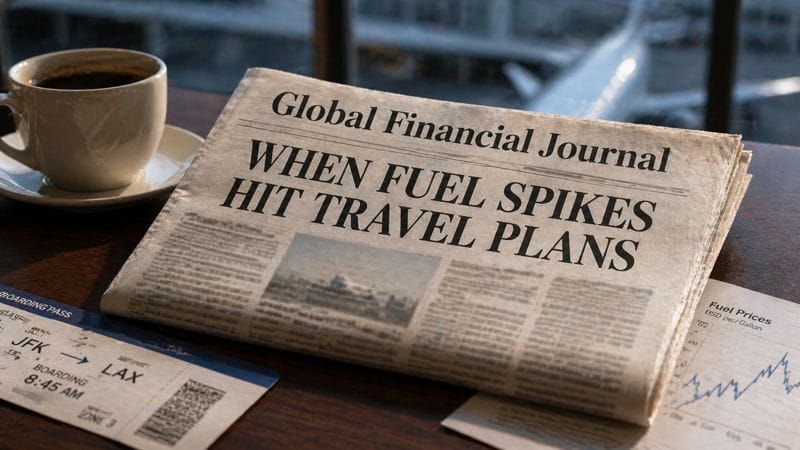
Airlines are cutting earnings guidance. Jet fuel doubled in five weeks. And yet 64% of people over 50 still plan to travel this summer. The question is not whether to go. It is whether the way you pay for it will cost you twice.
Get 0% intro APR on balance transfers and purchases until 2027 with these cards
Stop letting high interest rates eat into your monthly budget. If you're ready to break free from the high-interest trap, the solution could be simpler than you think.
There are top-tier cards currently offering a 0% intro APR on balance transfers and purchases into 2027, allowing you to pay down your principal faster than ever before.
What makes these cards some of the favorites for 2026 is that they don’t just help save you money on interest—they help you earn rewards. While you're eliminating your debt, you could be racking up travel rewards on every single purchase. Whether it's flights, hotel stays, or car rentals, you could be on the way towards building an excellent travel fund.
Because these cards have no annual fee, you get all the benefits of a premium travel card while focusing on your financial freedom.
Stop paying high interest every month and start earning rewards for your future travels today.
What $4.88 Jet Fuel Does to a Family Trip
Most travel budgets are built on assumptions. Price of a flight, cost of a hotel, what a week abroad or a road trip across the country might run. Those assumptions were reasonable eighteen months ago.
They are not reasonable now.
Jet fuel cost $2.50 per gallon on February 27. By April 2, it had reached $4.88 — a 95% increase in five weeks, driven almost entirely by the disruption to oil flows through the Strait of Hormuz. IATA confirmed that jet fuel reached $197 per barrel by mid-April, more than double its pre-war level. Airlines do not absorb that kind of cost. They pass it through.
The result: U.S. airfares rose 14.9% year over year in March 2026, the sharpest annual increase in several years. The U.S. Travel Association's Travel Price Index jumped 5.8% in a single month — the largest monthly increase since January 2022. A summer trip that cost a household $3,400 last year now costs closer to $3,940 on average, according to NerdWallet's 2026 travel survey. A trip that cost $10,000 in 2021 costs roughly $12,100 today when five years of sustained inflation are factored in.
The retirement travel plan that looked comfortable a year ago is now $2,100 more expensive simply because the world changed.
The Airlines Are Telling You This Is Not Temporary
The most useful signal is not the current price at the pump. It is what the airlines are saying about the months ahead.
United Airlines cut its full-year earnings guidance from $12 to $14 per share down to $7 to $11 - a reduction driven almost entirely by fuel costs. Delta's CEO said the company would significantly slow fleet growth. When the largest carriers in the country are cutting guidance and pulling back on expansion, they are telling you that elevated fuel costs are not a short-term disruption. They are a new operating reality.
Hotel rates are holding at an average of $162.58 per night nationally, up 2% year over year. Car rentals are averaging $62.25 per day across major airports. None of these numbers are moving lower while oil stays above $90 a barrel and the Strait of Hormuz remains only partially open.
The AARP 2026 Travel Trends Survey found that 64% of adults over 50 plan to travel this year — down six percentage points from 2025. The number one reason for the decline: price. The expected annual travel spend for this group rose from $6,800 to $7,200 per person. Fifty-two percent still rank travel as their top discretionary priority. But the gap between wanting to go and being able to afford it without financial stress is widening.
The Confidence Number That Should Concern Every Traveler
The Employee Benefit Research Institute released its 2026 Retirement Confidence Survey on April 21 — one day ago.
Worker confidence in a financially comfortable retirement dropped six percentage points to 61%, the lowest level in several years. Retiree confidence fell five points to 73%. Fewer than two in five workers describe their current financial situation as very good. Fewer than three in five have an adequate emergency fund — down from 64% in 2025.
These are not abstract statistics. They describe a group of people whose travel budgets are being squeezed from two directions simultaneously: higher trip costs on one side, and reduced confidence in the financial cushion underneath on the other.
The instinct when costs rise is to put the trip on the card and figure it out later. That instinct is expensive. Eighty-four percent of summer travelers already use credit cards to pay for travel. Nineteen percent say they will take on debt specifically to fund a vacation this year. The average card balance is now $6,580 per person. Forty-one percent of cards carry an APR above 21%.
Putting a $3,940 trip on a card at 21% and paying it down over 18 months costs roughly $600 in interest on top of the trip itself. The travel budget that was already $2,100 more expensive just got $600 more expensive again.
The Math on Paying Twice
The Federal Reserve holds rates at 3.50% to 3.75%. Deutsche Bank expects no cuts through all of 2026. The April 28 meeting is priced at a 98% probability of another hold. Credit card rates are not falling on their own timeline. The average APR on new card offers is 23.75% and has not moved meaningfully in months.
That means the window to act on a 0% introductory offer is genuinely useful right now in a way it was not when rates were falling. A balance transfer card with 0% APR through 2027 does two things at once: it stops the compounding on existing debt, and on a card that also earns travel rewards, it starts building toward the next trip on every purchase made in the meantime.
The trip is going to cost more this year. That part is not negotiable. What is negotiable is whether the financing cost gets added on top of it.
Forty to sixty percent of people who open balance transfer cards do not pay off the full balance before the promotional period ends. They end up back at 24% APR having gained only a temporary reprieve. The math works when the introductory period is used deliberately — not just to defer the balance, but to eliminate it.
The retirement travel plan did not have to be abandoned. It had to be repriced. The difference between a trip that stays within budget and one that costs $600 more than it needed to is often one decision made before the booking, not after.
Written by Deniss Slinkins
Global Financial Journal