
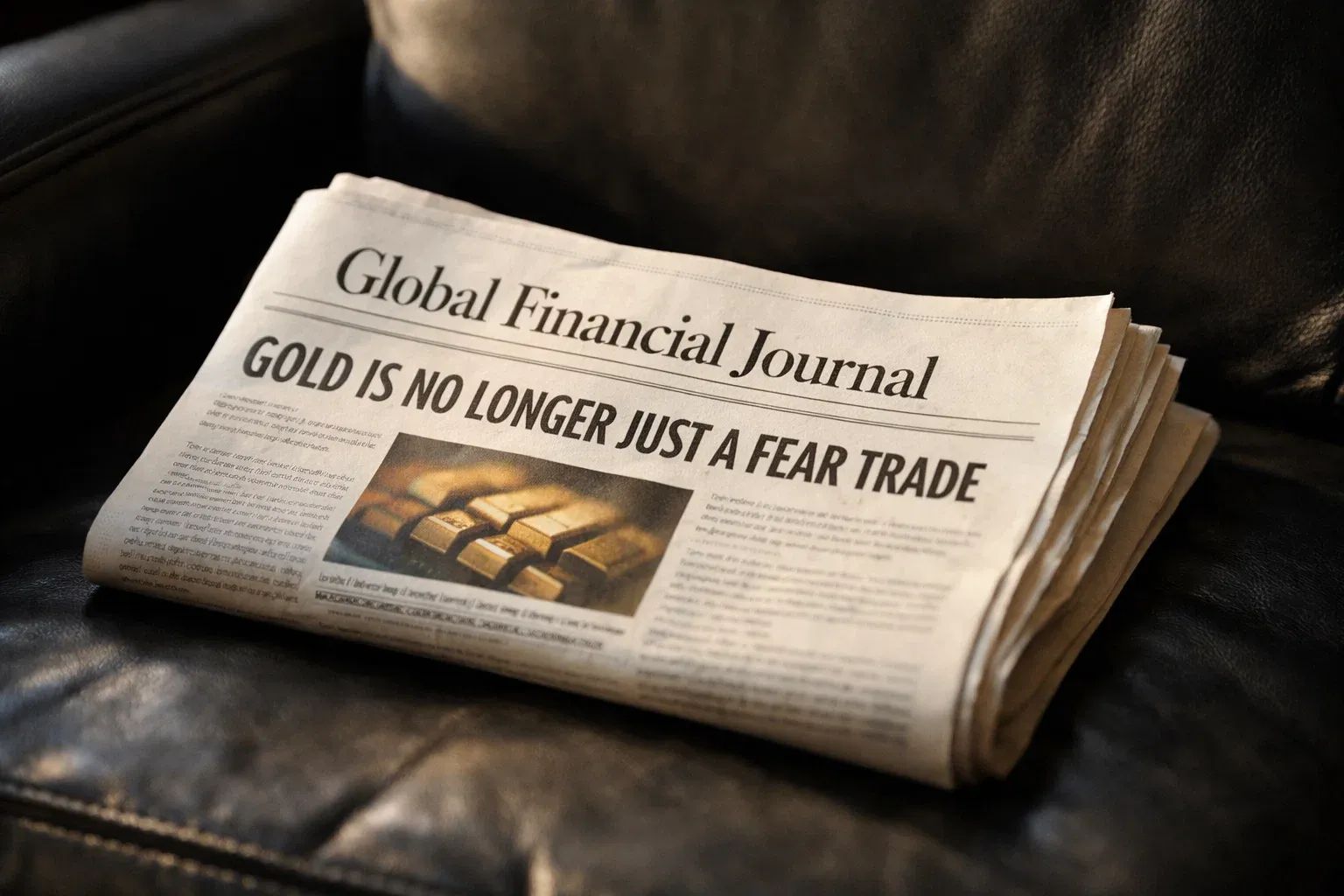
Gold Is No Longer Just a Fear Trade

Rare Card Helps Tackle Debt + Double Cash Back For 1st Year
If you have outstanding credit card debt, getting a new 0% intro APR credit card could help ease the pressure while you pay down your balances.
On top of all that, these top credit cards offer up to an insane 5% cash back perk that gets matched after your first year. That's up to 10% back on qualifying purchases!
Gold has often been treated as a simple panic trade. War breaks out, markets flinch, and money moves into the metal until the immediate danger fades. That is not quite what is happening now.
The fragile ceasefire between the United States and Iran helped cool some of the most intense market anxiety. Oil pulled back from its war highs. Investors moved briefly back toward risk. But gold did not collapse with the first wave of relief. It kept finding support as investors looked past the ceasefire headline and focused on deeper issues that have not gone away: inflation pressure, reserve diversification, a softer dollar, and a world that feels less certain than it did a few months ago.
Gold is trading near $4,787 an ounce, up more than 25% since early 2025. J.P. Morgan's commodities team has set $5,000 as its year-end target. Those are not fringe predictions. They come from one of the largest banks in the world, and they rest on a foundation that is broader than a single geopolitical headline.
The Official Buyers Never Really Left
One reason gold has held its gains is that demand is no longer just a retail reaction to bad headlines. It is also being driven by institutions thinking in much longer time frames.
China's central bank extended its gold buying streak to 17 straight months in March, adding to reserves even as prices stayed elevated. That matters because official-sector demand has become one of the strongest structural supports for gold in recent years. Central banks are not trading for a one-day bounce. They are adjusting reserve portfolios in a world where geopolitical friction, sanctions risk, and questions around long-term currency stability all carry more weight than they used to.
When central banks keep adding exposure after large price moves, the metal is being treated less like a tactical hedge and more like a reserve asset with a specific role: something outside the credit system, outside corporate earnings, and outside any one central bank's policy path.
The Dollar Gave Gold a Second Engine
The second part of the story is the U.S. dollar.
The dollar was heading for its biggest weekly decline since January as markets weighed ceasefire hopes, softer U.S. data, and a less straightforward policy outlook. A weaker dollar tends to support gold by making it cheaper for non-U.S. buyers and by signaling that investors are questioning whether the greenback will remain the uncontested anchor it once was.
That matters because gold is not being held up by only one force. It has support from geopolitics, from reserve managers, and from currency markets. That is a broader foundation than a short-lived burst of fear — and it explains why the metal did not simply sell off when the ceasefire was announced.
What Gold May Be Saying Now
The ceasefire reduced the panic. It did not settle the deeper questions.
There is a meaningful difference between a market that is less frightened than it was last week and a market that feels genuinely secure about the months ahead. Gold tends to perform best when that second kind of confidence is missing. The current setup still has plenty of reasons for caution: higher energy costs than before the conflict, a Federal Reserve that has no clear path to rate cuts in 2026, inflation running at 3.3% annually, and a global backdrop where sanctions, tariffs, and strategic competition remain part of the policy landscape.
Morningstar's standard guidance puts gold at no more than 10% to 15% of a well-diversified portfolio. At that level it reduces overall volatility. At higher concentrations it introduces its own risk — gold can fall sharply when sentiment shifts, as it did briefly in mid-March before recovering. The question is not whether to own it but whether your current allocation still fits the environment you are actually in, rather than the one from six months ago.
Gold right now may not be saying only that people are scared. It may be saying something more specific: that trust is being repriced. Trust in a quick return to lower inflation. Trust in a clean path to easier policy. Trust that a ceasefire headline automatically restores stability.
Gold sits outside many of those assumptions. That is why it keeps attracting support even when stocks bounce and the immediate crisis appears to cool.
The Practical Takeaway
For most portfolios, the useful question is not whether gold should replace everything else. It is whether the current environment calls for a harder look at which assets are actually protecting purchasing power and which are quietly eroding it.
A credit card balance at 22% APR does the latter, reliably, regardless of what gold or oil or the dollar does next. It does not benefit from geopolitical uncertainty. It does not hold its value. It just compounds. Eliminating that cost is the household equivalent of the same instinct driving central banks toward gold: reduce exposure to things that depend on someone else's good judgment.
Not because fear is everywhere. Because confidence is not.
Rare Unlimited Cash Back Match Turns Heads (Ad by FinanceBuzz)
Written by Deniss Slinkins
Global Financial Journal